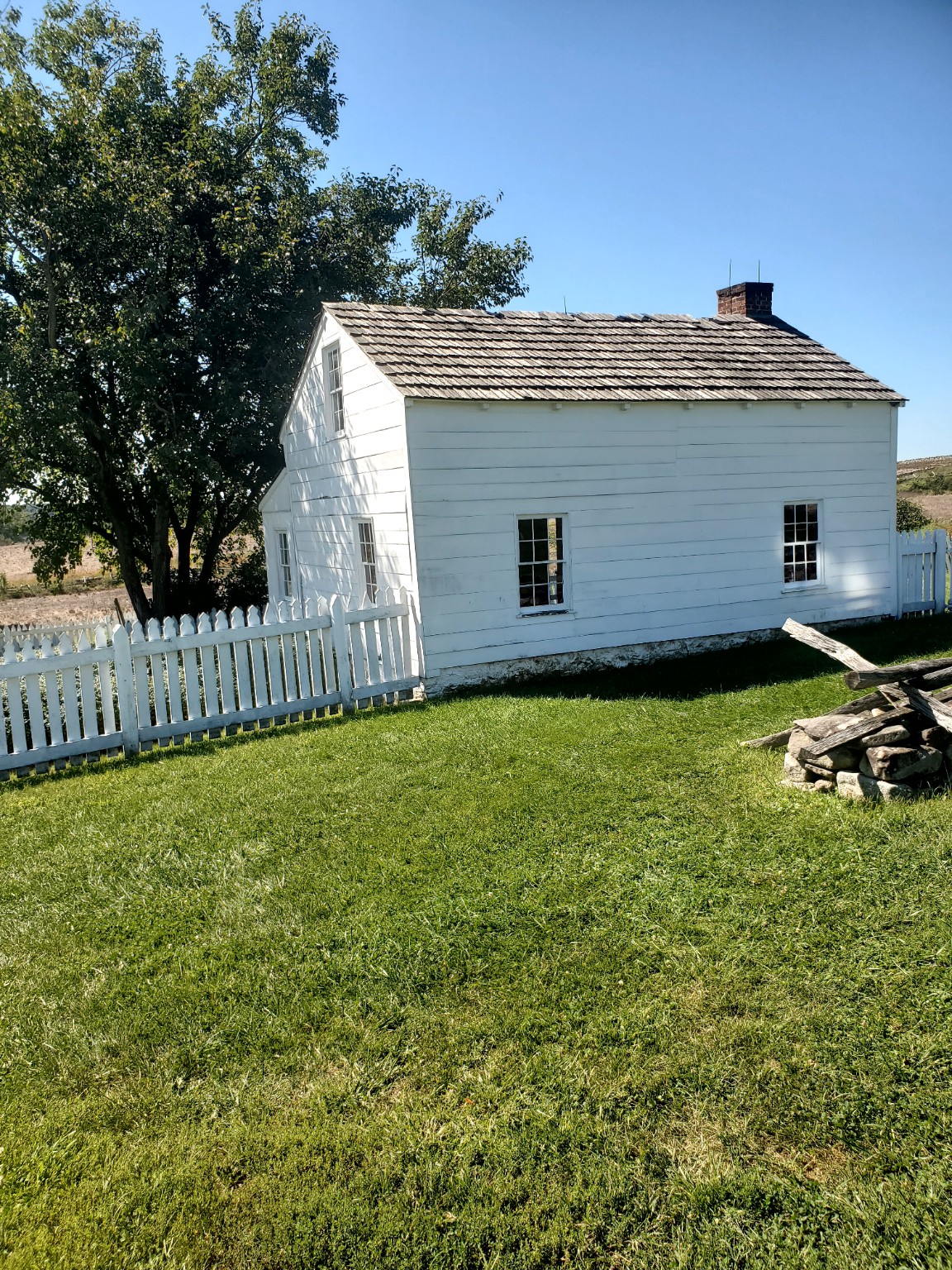
When my family visited Gettysburg, we stopped at the small house known as General Meade’s headquarters.
It is a place remembered for military decisions: a commander, a council of war, and the question of what the Union army would do next.
But before it was headquarters, it was someone’s home. That someone was Lydia Leister. Learning about her changed the way I thought about the house—and the way my youngest daughter experienced the battlefield.
A home before it was a landmark
Lydia was a fifty-two-year-old widow when the Battle of Gettysburg reached her doorstep in July 1863. Her husband, James, had died in 1859, leaving her with six children. Several were still living with her when the battle began.
In March 1861, she had purchased a home on a nine-acre farm south of Cemetery Hill. She planted, tended animals, built fences, and improved the property. This was the place where she was building a future for her family.[1]
Then, on July 1, she was warned to leave. Fighting was approaching, and staying would put her and her children in danger. They fled their home.[2]
The army moved in
General George G. Meade established his headquarters there on July 2. The farm’s location made it useful for communicating with the Union army’s positions. Officers, couriers, and guards turned a family’s home into a busy centre of military activity.
Late that night, Meade gathered senior generals inside to discuss the fighting and decide whether to remain in their position. They agreed to stay.
On July 3, Confederate artillery firing towards Cemetery Ridge overshot its targets. Shells struck the house and farmyard, forcing Meade to move to a safer headquarters. After Pickett’s Charge, the house and barn also served as an aid station and a gathering point for moving wounded soldiers to field hospitals.[2]
The decisions made here belong in the story of Gettysburg. So does the family whose home made room for them.
What Lydia found when she returned
Lydia and her children returned on July 5. Their house was damaged, their orchard and crops devastated, and their food stores and livestock gone. Seventeen dead horses lay scattered around the farm.[3]
In an account recorded by a visiting journalist in 1865, Lydia described the damage in terms of everyday life. Fence rails had been burned. Young apple trees had been broken down. Burning horse carcasses near her best peach tree had killed it. The dead horses had spoiled her spring, making it necessary to dig a well. A shell had smashed a bedstead, and the porch was wrecked.[1]
These details bring the aftermath close. A damaged orchard means future harvests lost. A spoiled spring means a household without its usual water supply. Broken fences, missing animals, and a battered house mean work and expense before ordinary life can resume.
For Lydia, the end of the fighting was the beginning of another struggle. The detail my daughter remembered
During our visit, my youngest daughter became emotional when she learned about the seventeen dead horses.
That was the detail that reached her. Through those animals, the losses at Gettysburg became immediate and personal.
As a homeschool mother, I think about moments like that. We can prepare dates, maps, and explanations, but we cannot always predict which detail will help a child connect with the past. Sometimes it is an animal.
Sometimes it is a familiar household object or the thought of coming home to find everything changed.
Her reaction reminded me to leave room for those connections. Learning history includes understanding what happened, but it also asks us to notice who lived through it.
A life beyond the battle
Lydia repaired and replanted. Over time, she added another nine acres to her property. She continued living on the farm until 1888.[3]
That brief account of recovery holds years of labour. Remembering her perseverance should also leave room for what she lost and the work recovery required.
Today, visitors can stand at her home and think about the decisions made by generals. I hope they will also think about Lydia: the woman who worked that land before the armies arrived, came home to the damage they left, and kept building a life afterwards.
Gettysburg’s story continues beyond its three days of battle. Lydia Leister helps us see what came next.
A question to carry with you
When you visit a historic place, ask: Whose everyday life was happening here before this became history?
You may find a story that changes what you see.